Hi, I'm Ben.
I'm a Master's student in computer science at the University of Montana, working in Dr. Lucy Owen's lab on machine learning for cognitive neuroscience.
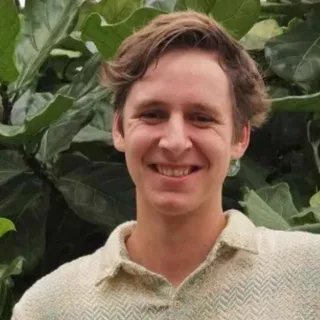
I finished my BS at UM in December 2025 with a double major in computer science and mathematical sciences, focusing on simulation modeling, machine learning, number theory and linear algebra. Outside of the lab, I have a passion for hockey, which has driven me to build a few webapps for personal enjoyment.
After I finish my MS in December 2027, I'd like to work in industry, ideally exploring applied machine learning techniques in the healthcare industry. I'm happy to relocate if necessary, as I have lived in 4 countries and 9 states. Down the road, I'm interested in exploring a potential PhD.
benoliver47@gmail.com
GitHub
LinkedIn
CV
Research
SuperEEG, Brought Up to Date
Python | GPyTorch | github.com/benolivr/supereeg-gpyt
SuperEEG estimates activity throughout the brain from a small number of implanted electrodes. It learns how activity at different locations correlates across many patients, then uses Gaussian process regression to fill in the places nobody recorded. It was my advisor's doctoral project. I ported it to GPyTorch so model building can run on the GPU, moved it to modern Python (3.12+, NumPy 2), and added a tool that converts files saved in the old format.
Archetypal Analysis of Brain Activity
I'm investigating archetypal analysis as a way to describe brain activity. Common ways of compressing brain data, like PCA, produce components that can be hard to read, since they mix positive and negative contributions. Archetypal analysis instead describes each moment as a blend of a few extreme patterns that actually appear in the data, which makes it easier to ask what each pattern means.
Brain Dynamics After Trauma
Early stage
Next, I'm looking at combining archetypal analysis with timecorr, which measures how brain regions rise and fall together moment by moment, and how that coordination itself shifts. The plan is to apply both to fMRI from trauma-exposed people, to see whether exposure leaves a shared signature in how the brain coordinates itself, and whether people who go on to struggle, stay resilient or recover look different.
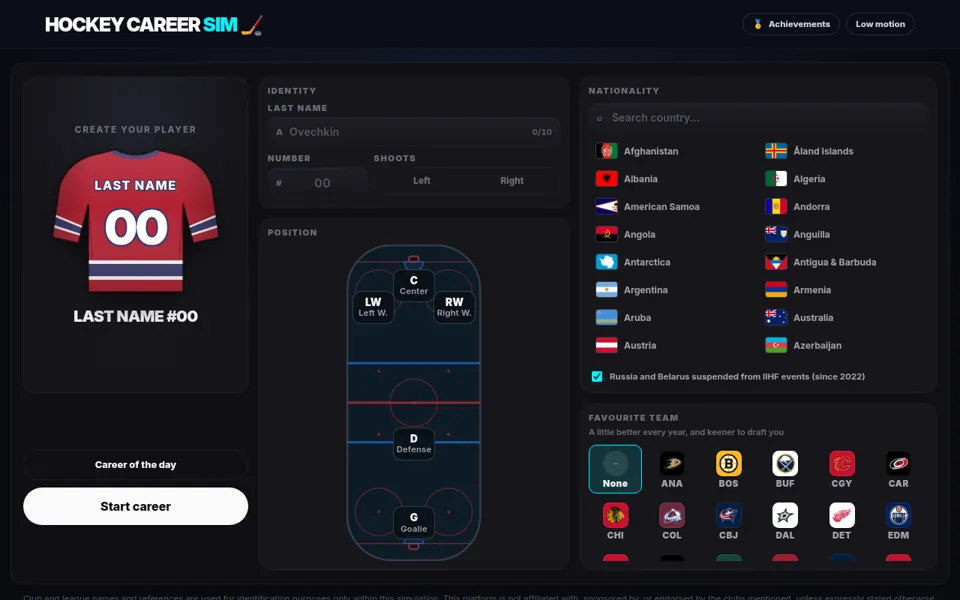
JavaScript | no framework | runs entirely in the browser
Create a player at 16 and play out a whole career: junior hockey, the draft, game-by-game NHL seasons, contracts, injuries, international tournaments and, if it goes well, the Hall of Fame.
Play it